STORIES FROM THE NIGHT SHIFT
"I've been a sleep consultant for eight years. The question I get asked most isn't about sleep."
In conversation with Lunio · Rachel, sleep consultant, Bristol · 8 years in practice

Rachel has been a sleep consultant in Bristol for eight years. She's worked with several hundred families. She asks good questions and gives straight answers, which is, she says, most of what the job actually is.
We asked her the questions people don't usually ask consultants.
After eight years, what do you know about families with sleep problems that you didn't know at the start?
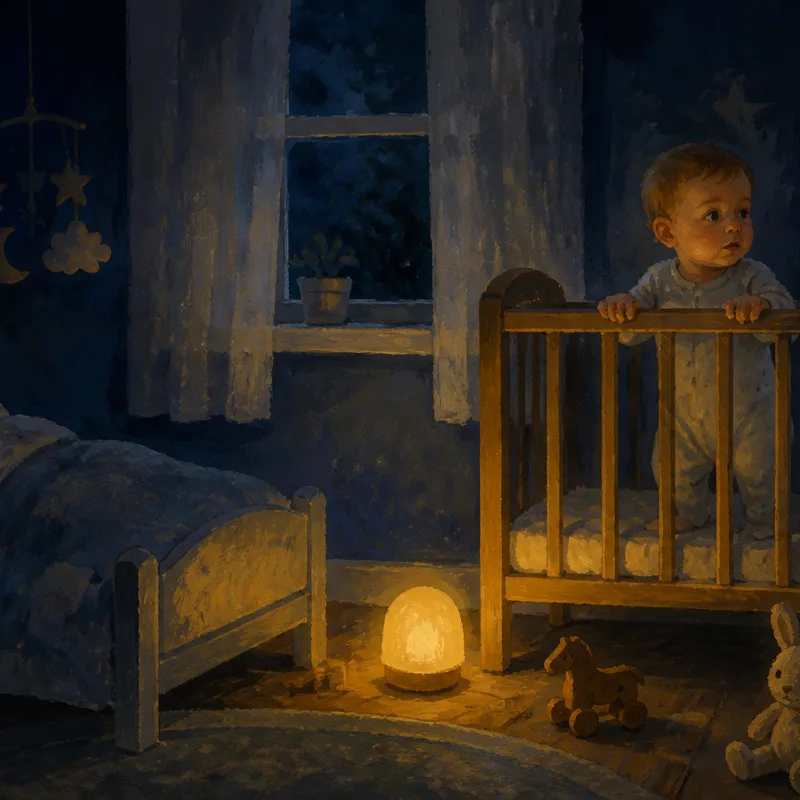
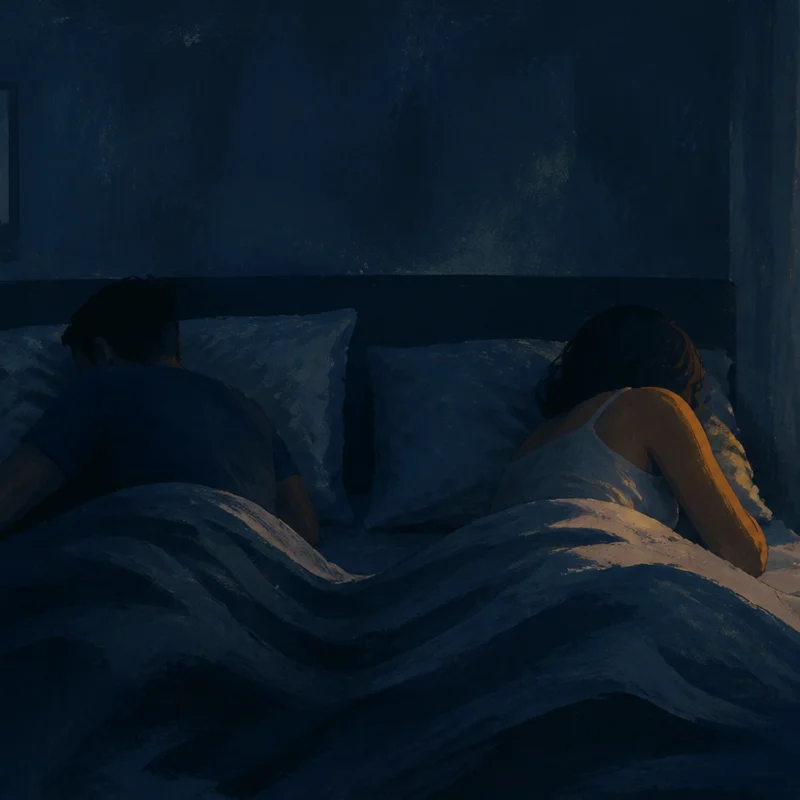
That the problem is almost never what it looks like on the surface. A family contacts me because their baby won't sleep. But underneath that, there's usually something else: one parent who's holding everything together and quietly collapsing. A couple who've stopped communicating properly because they're too tired. A mother who's been told by approximately everyone — her own mother, her health visitor, some article she read — that what she's feeling isn't normal. That she should be enjoying this.
Sleep is the presenting problem. What's actually happening is a family under a kind of sustained pressure that people don't talk about honestly, because the cultural expectation is that you're supposed to be grateful and in love and coping. And most of them are all of those things and also completely exhausted and in need of actual help.
What's the question you get asked most?
"Is it normal to feel like this?"
They never quite finish the sentence. "Feel like this" carries different things for different people — rage, resentment, sadness, the specific horror of waking up in the morning and feeling that dread before you've even remembered why. But it's always a version of the same question. Am I allowed to be struggling? Have I done something wrong to end up here?
The answer is always the same: yes, it's normal. No, you haven't done anything wrong. Sleep deprivation at this level is a clinical condition that affects cognition, emotional regulation, relationships, physical health. The research on what it does to parents over months and years is quite stark. What they're feeling isn't weakness. It's biology.
That reassurance — just being told this is real and measurable and you're not uniquely failing — is sometimes the most useful thing I do in an entire consultation.
You've said before that there are families you couldn't help. What stops a consultant from helping?
A few things, and I want to be honest about all of them. Sometimes it's me — I'm not the right fit for a family's values or approach, and it's better to say that early. Sometimes it's the parents' situation: I can give a perfect plan and if it's being undermined by a grandparent who goes in when she shouldn't, or if both parents aren't genuinely aligned on the approach, the plan won't hold. Consistency is the whole game. A plan is a set of instructions. The hard part is executing those instructions at 3am on Night 3 when everything in you wants to stop.
But the hardest cases to sit with are the families who come to me at eighteen months or two years, when the problem has been running for a very long time. Not because they can't be helped — they can, and the interventions work — but because I think about what would have been different if they'd had access to clear information at nine months. If someone had told them: this is a real problem, it's not going to fix itself, and here's a specific approach for your specific child. Those families spent a year and a half exhausted when they didn't have to.
What do you think about the cost of professional sleep help? Do you think about access?
Constantly. My full package is £450. That's a lot of money for most families, especially families who've just had a baby and often have one reduced income. I know my waiting list is several weeks long. I know there are families who enquire, look at the price, and close the tab.
I don't have a solution to that. I charge what I charge because the work is intensive and the follow-up is real and I've spent eight years building the expertise. But I'm not naive about what it means that the families who need this most are often the ones who can't access it.
What I'd say to those families is: the structure matters more than the source. The right schedule, the right routine, the right response to night wakings — those things can come from different places. They don't have to come from me. What matters is that the information is specific to your child and that you have something consistent to hold onto at 3am, when the vague advice you've collected stops being useful.
Is there anything you'd want parents to know before they start looking for help?
That Night 3 is real, and it's going to feel like the plan isn't working, and it is.
I say that to every family before we start. Because the ones who make it through Night 3 — not the ones who have the best plan, not the ones who are the most disciplined — are the ones who knew it was coming. Preparation isn't just practical. It's emotional. You can tolerate a hard night differently if you understand what it means.
Most of what I do is give people that. Information, framed in a way that makes sense for their situation, delivered before the difficult moments rather than during them. That's not magic. It's just clarity. And clarity, at 3am, is worth an enormous amount.
Rachel's point about access is part of why Nora Live exists — a voice consultation that looks at your specific child's schedule, tells you what's actually happening, and gives you the plan and the Night 3 preparation before you need it. Not a replacement for what Rachel does. A way to start.
Rachel's interview is a composite inspired by the experience of sleep consultants across the UK and Europe. Details have been adapted for privacy.
More on these topics
Want someone to look at this with you tonight?
Nora Live is a 25-minute voice consultation, available right now — no waiting list. You get the session report, your 5-night plan and five nights of chat follow-up. $89.
$45 one-time · No account, no app