NAPS
Why does my baby only nap held or in the car?
The moment you put your baby down in the crib, awake or already asleep, they are up within minutes. Held against you, or moving in the car, they sleep beautifully for an hour or more. This is not a broken baby. It is a baby who has learned to associate sleep with motion and containment, and has simply not yet learned to do it without them.
In this article
Movement and being held both provide a kind of soothing input that closely resembles the environment your baby experienced before birth, gentle motion, contained warmth, a heartbeat nearby. This makes falling and staying asleep genuinely easier under those conditions. The crib offers none of that input by default, which is why the contrast can feel so stark, not because something is wrong with your baby's ability to sleep.
Why movement and containment work so well
Before birth, your baby experienced almost constant gentle movement and a fully contained, snug environment. It should not be surprising that recreating some version of that, rocking, the rhythmic motion of a car, being held snugly against a chest, produces easier, longer sleep, particularly in the early months. This is not a sign of an unusually difficult baby, it is a very understandable preference given where they have just come from.
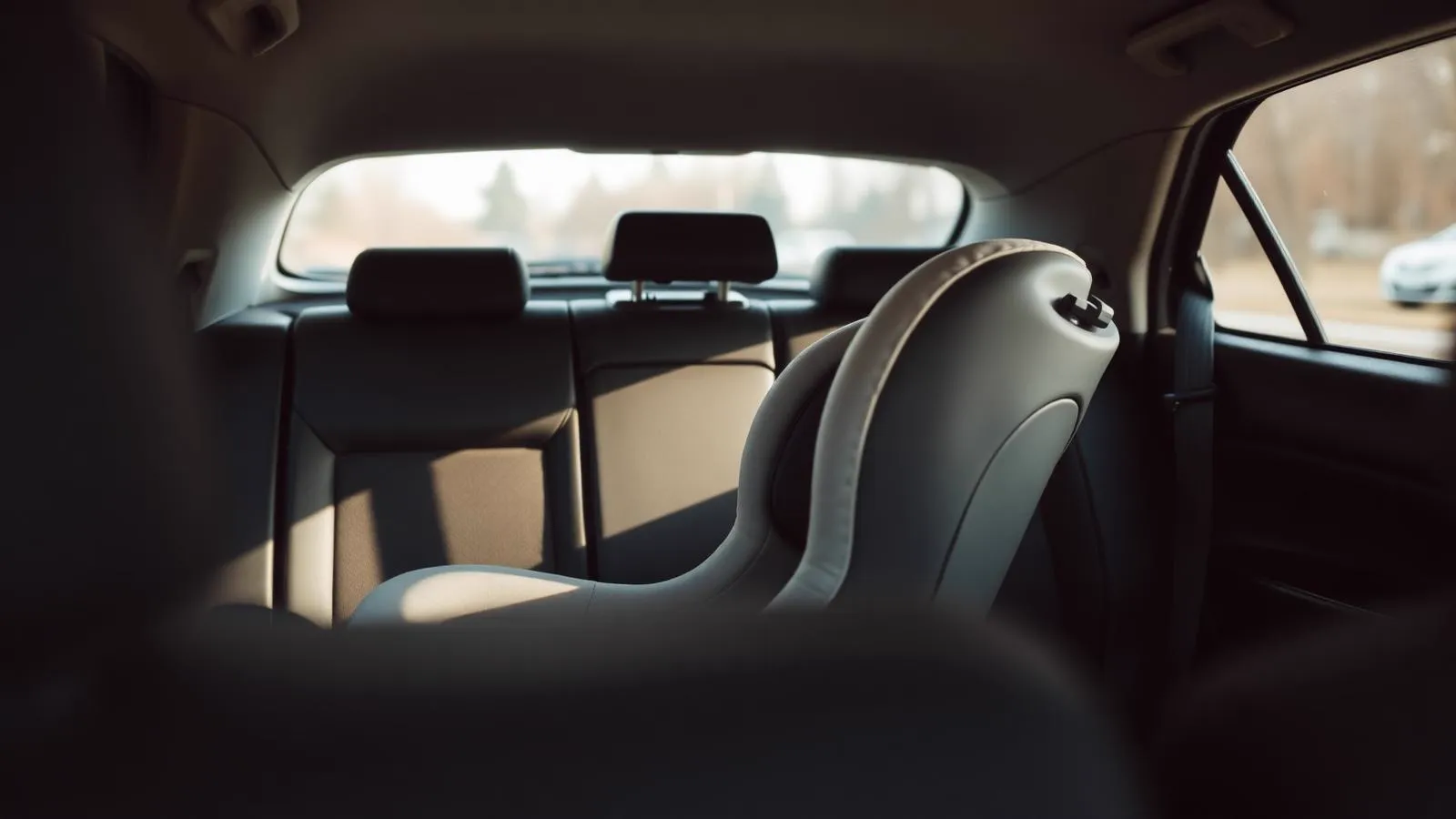
The car in particular combines several of these elements at once, gentle continuous motion, a contained space, often a slightly dimmer environment, and frequently a slightly different pitch of white noise from the engine and road, all working together to produce sleep that can feel almost effortless by comparison to the crib.
What is actually happening in the crib
A flat, still crib offers none of the movement or containment your baby has learned to associate with falling asleep easily. This is not a comfort problem in most cases, a decent crib mattress is not inherently less comfortable than an arm, it is an association problem, your baby's brain has linked falling asleep specifically to the presence of motion and containment, and finds it much harder to initiate or maintain sleep without those specific inputs present.
This is the same underlying mechanism behind any other sleep association, feeding to sleep, rocking to sleep, needing a parent in the room, just built around movement rather than one of the more commonly discussed associations. The fix follows the same general logic as any other association, gradually reducing reliance on the specific input while giving your baby the chance to develop the skill of falling asleep without it.
There is nothing wrong with a baby who sleeps beautifully in motion and struggles on a flat surface. It means the association has simply not yet been built around stillness. That association can be built, the same way any other sleep skill is built, gradually and with practice.
When this is genuinely fine to allow
For a very young baby, particularly under three or four months, relying on motion or contact naps some or most of the time is completely reasonable and not something to feel pressure to fix immediately. Total sleep matters more than where it happens at this age, and forcing independent crib sleep before your baby has the developmental capacity for it tends to produce more frustration than progress.
The point where it becomes worth actively addressing is usually when it starts limiting your family's actual life, if every nap requires someone to be actively holding or driving your baby for an hour or more, several times a day, or if your baby needs to start managing naps in daycare or with another caregiver who cannot replicate the same setup. At that point, building the skill of falling asleep on a flat, still surface becomes genuinely useful, rather than simply a preference for how things are done.
How to transfer the skill to a flat surface
The most reliable approach uses the existing motion or contact as a bridge rather than removing it abruptly. Start by placing your baby down on the flat surface while drowsy but not yet fully asleep, having done the settling motion beforehand rather than throughout the entire nap, so the crib gradually becomes associated with the final part of falling asleep rather than none of it.
From there, gradually reduce how much of the settling happens through motion before the transfer, aiming over a week or two for your baby to be placed down earlier and earlier in the drowsy process, until the crib itself is doing more of the settling work rather than the motion beforehand.
Pay attention to timing as well as method. Attempting this transition when your baby is significantly overtired tends to make the flat surface feel even less appealing by comparison, so timing the practice attempts for a nap where your baby is not already running on empty tends to go more smoothly.
Working through this transfer for your specific baby's age and current pattern is easier with someone looking at the actual situation.
What to do tonight
- If your baby is under three or four months, give yourself permission to lean on motion or contact naps without feeling behind, this is developmentally normal and does not need fixing immediately.
- If the pattern is starting to limit your family's day to day life, try placing your baby down drowsy but awake after some settling motion, rather than fully asleep, as a first small step toward building the flat surface skill.
- Gradually reduce how much settling happens before the transfer over a week or two, rather than attempting to remove motion entirely in one attempt.
- Time your practice attempts for a nap where your baby is not already overtired, since an overtired baby is far less likely to accept a new, unfamiliar way of falling asleep.
More on these topics
Get your child's personalised routine in 3 minutes
Answer 5 quick questions. We'll send a tailored bedtime plan and a 7-night tracker — by email, no app.
$45 one-time · No account, no app