SAFE SLEEP
How to stop swaddling before your baby can roll
When to stop swaddling, the early signs of rolling to watch for, and three gentle ways to transition your baby out of the swaddle without losing weeks of sleep.

In this article
The swaddle has probably been the best tool you've had. It calms the flailing arms, quiets the startles, and might be the only reason anyone in your house has slept for more than two hours. So when you read that you need to stop before your baby rolls, it can feel like being asked to give up the one thing that works.
The AAP's safe-sleep explanation says to stop swaddling when a baby looks like they are trying to roll; weighted swaddles and weighted sleep sacks are not recommended.
The safest timing depends on whether rolling signs have begun. If they have, stop restraining the arms now. If they have not, you can plan an arms-free transition before rolling starts. Here's how.
Why the swaddle has to go
Swaddling works because it mimics the snug feeling of the womb and stops the startle reflex, also called the Moro reflex, from jolting your baby awake. In the early weeks that's genuinely helpful.
The risk comes with rolling. A swaddled baby who rolls onto their tummy can't use their arms to lift their head or push themselves back. That's why safe sleep guidance, including from the American Academy of Pediatrics, says to stop swaddling as soon as your baby shows signs of trying to roll. For many babies, that's around two to three months, sometimes earlier.
Notice the wording: signs of trying to roll, not the first successful roll. Once those signs appear, use an arms-free option for every sleep rather than continuing a gradual one-arm transition.
The early signs to watch for
- Rocking from side to side when lying on their back.
- Lifting their hips or swinging their legs over to one side.
- Rolling onto their side, even if they don't go all the way.
- Ending up turned sideways or shifted in the cot after a nap.
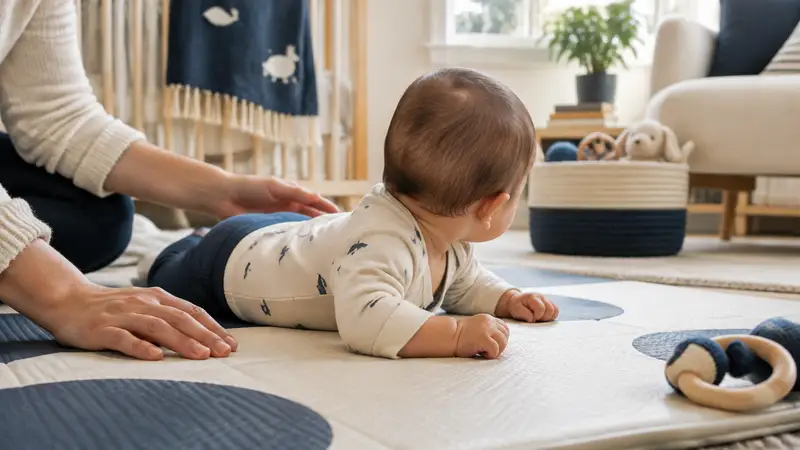
- Pushing up strongly on their arms during tummy time.
- Busting out of the swaddle, especially one arm.
If you see a sign of trying to roll, stop swaddling now and use an arms-free option for every sleep.
Three ways to transition
There's no single right method. Choose the one that fits your baby's temperament and how much disruption you can face this week.
1. One arm out, then two (the gradual approach)
This gradual option is only for a baby who is not showing any signs of trying to roll. If rocking, side-rolling or another rolling cue has started, skip this method and move straight to both arms free.
- Nights 1–3: Swaddle with one arm out. Many babies prefer the arm they naturally bring to their mouth.
- Nights 4–6: Both arms out. If you use a swaddle with a separate arm section, open both. If you use a traditional wrap, switch to an arms-free sleeping bag.
- From then on: Arms-free sleeping bag for all sleeps.
Start with bedtime, when sleep pressure is highest. Once that works, move naps over too.
Important: if your baby shows any sign of trying to roll or actually rolls, go straight to arms free for every sleep.
2. Bedtime first, naps later
If there are no rolling signs, some families practise with an arms-free sleep sack at bedtime before using it for naps. Once any rolling cue appears, arms must be free for naps and nights; do not keep one sleep swaddled.
3. All at once
Some babies barely notice. If your baby is breaking free or showing a rolling cue, switch every sleep to arms free now. Sleep may be unsettled during the adjustment, but the timing varies.
What to use instead
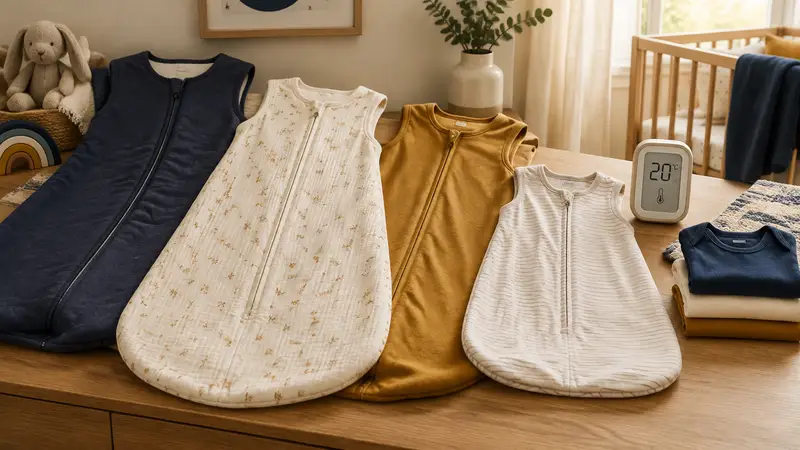
An arms-free sleeping bag (also called a sleep sack) is the standard next step. It keeps your baby warm without loose blankets and leaves their arms free.
A few things to avoid:
- Weighted sleeping bags or swaddles. These aren't recommended for infant sleep.
- Loose blankets in the cot.
- Products that pin the arms down or restrict movement once rolling has started.
Choose the right warmth for your room. If you're unsure, see what to wear under a sleeping bag at each room temperature.
Helping your baby cope with the startle reflex
The startle reflex usually fades somewhere between four and six months, so for some babies it's still strong when the swaddle comes off.
Lay your baby down slowly. Lower them feet first, then bottom, then head, keeping them close to your body. A sudden feeling of falling backwards is what triggers the startle.
Keep a hand on their chest for a minute or two after you put them down, then lift it slowly.
Settle them well before the transfer. Wait until their breathing is slow and their limbs are loose.
Use white noise at a gentle volume. It can mask the small sounds that tip a lightly sleeping baby awake.
Let them find their hands. Many babies start to self-soothe by sucking their hands once they're free. That's a skill the swaddle was blocking.
What to expect
- The first nights may bring more wake-ups, shorter naps or more startles.
- Adjustment time varies; keep the safe arms-free setup consistent.
- Some babies sleep better once they're free, because they can move into a comfortable position and reach their hands.
If things are still very unsettled after two weeks, look at timing as well. An overtired baby startles more and settles less easily. The wake window calculator can help you check.
Common questions
Can I keep swaddling until the four-month regression is over? Only if your baby is showing no signs of rolling. Safety comes before timing. Many babies need to stop before or during the four-month change, and they cope.
What if my baby gets out of the swaddle at night? A loose swaddle is a suffocation risk, so if your baby regularly breaks free, it's a sign to transition now.
Is a hip-healthy swaddle different? Hip-healthy swaddles leave room for the legs, which is good for hip development, but the rolling rule still applies.
My baby only sleeps swaddled. Will they adjust? Babies can learn to sleep arms-free, but the timeline varies. Offer calm settling while keeping the safe setup consistent.
The short version
Stop swaddling at the first sign of trying to roll, not after the first roll. A one-arm transition is only for a baby with no rolling cues; once a cue appears, switch every sleep to both arms free. Use a correctly fitted, unweighted sleep bag if desired.
Once rolling does arrive, here's what to do when your baby rolls onto their tummy and gets stuck. And if you'd like a routine built around your baby's age, that's what Lunio does.
Lunio provides educational sleep coaching, not medical diagnosis or treatment. Follow your child's clinician and local safe-sleep guidance.
More on these topics
Get your child's personalised routine in 3 minutes
Answer 5 quick questions. We'll send a tailored bedtime plan and a 7-night tracker — by email, no app.
$45 one-time · No account, no app
Want more than a plan? Talk to a sleep consultant tonight — $89