SAFE SLEEP
What should my baby or toddler wear under a sleeping bag? A guide by room temperature
68°F (20°C) in the nursery and no idea what your baby should wear? A clear guide to sleeping bag TOG ratings, layers by room temperature, winter toddler sleep and how to check your child isn't too hot.
In this article
You've checked the thermometer. It says 68°F, or 20°C. You're standing in the nursery holding a sleepsuit in one hand and a short-sleeved bodysuit in the other, trying to work out whether one is too much or the other is too little.
The Lullaby Trust room-temperature guidance recommends using the sleep-bag manufacturer's instructions because fabrics and TOG products vary.
This is one of the most common worries in the first years, and for good reason. Overheating is a recognised risk factor for sudden infant death in young babies. The useful starting point is the chart supplied with your specific sleep bag, followed by a temperature check on your child.
The basics first
A comfortable room for sleep is around 16–20°C (61–68°F). That's the range recommended by UK safe sleep guidance from the Lullaby Trust. Many homes run warmer, especially in winter with heating on. If your room is at the warmer end, dress your baby in fewer layers.
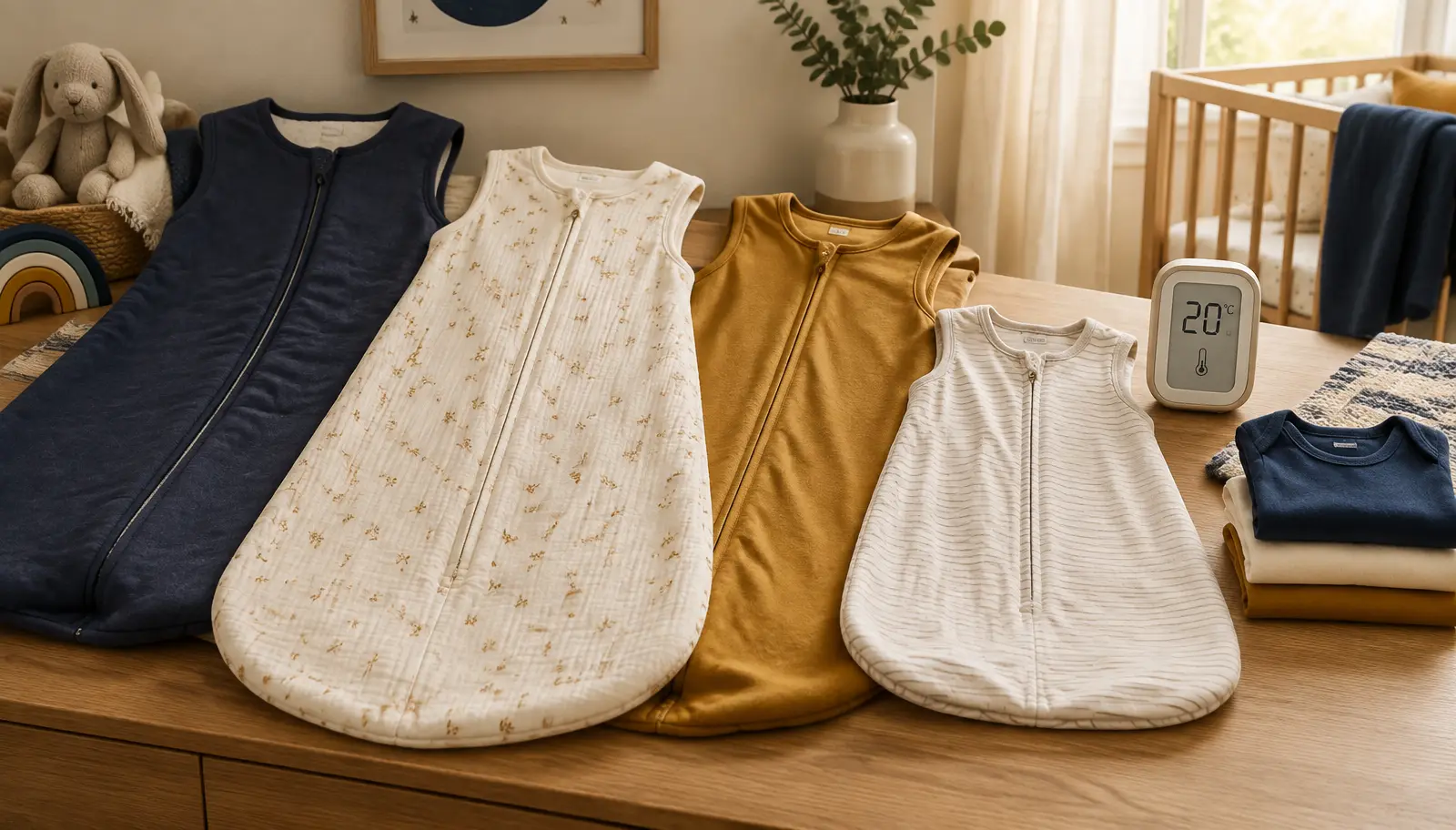
Sleeping bags are rated in TOG. TOG measures how warm a fabric is. Higher TOG means warmer. Common ratings are 0.5, 1.0, 2.5 and 3.5.
Babies don't need much more than you. A common rule of thumb is that a baby needs one more light layer than an adult would be comfortable in. Many parents overdress, not underdress.
No hats indoors. Babies lose heat through their heads, so hats and hoods should never be worn for sleep inside.
What to wear at each room temperature
These are examples, not a universal prescription. Always follow the specific clothing chart, size range and warnings on your sleeping bag's label because brands and fabrics vary.
So, at exactly 68°F / 20°C?
That temperature sits right on the line between two bands, which is why it's so confusing. Depending on your product's own chart, you may see options such as:
- 2.5 TOG sleeping bag + short-sleeved bodysuit. only if the specific product chart recommends it for 20°C.
- 1.0 TOG sleeping bag + long-sleeved bodysuit, or a light sleepsuit if your baby tends to run cool. only if the specific product chart recommends it for 20°C.
Then check your baby after an hour (see below) and adjust the next night.
Toddlers in winter: what TOG for a 2-year-old?
Toddlers are famous for kicking off blankets, which is why many families keep using sleeping bags long after the first year. The same TOG chart applies, with a few differences:
- Make sure the bag fits. Toddler bags come in larger sizes with foot openings or leg sections for children who are walking. The neck and armholes should be snug enough that your child can't slip down inside.
- For a room around 18–21°C, use the clothing combination specified by that toddler bag's manufacturer.
- For a room below 16°C, check whether the product is approved for that temperature and follow its exact clothing chart.
- Toddlers often run warmer than babies because they move a lot in their sleep. If your toddler wakes sweaty, drop a layer before you drop the TOG.
- Once your child is out of a sleeping bag, a lightweight duvet suitable for their age is usually introduced, often from around two to three years in a bed. Follow the product's age guidance.
How to check your child isn't too hot or too cold
Hands and feet are not a reliable guide. They often feel cool, even when your child is warm enough.
Instead, feel the back of the neck or the chest.
- Warm and dry: just right.
- Sweaty, clammy or hot: too warm. Remove a layer or switch to a lower TOG.
- Cool chest or back: recheck the room and the manufacturer's chart before changing a layer.
Other signs of overheating include flushed cheeks, damp hair, rapid breathing and restlessness. If your baby has a fever, don't add layers, and contact your doctor if you're worried.
Common mistakes
Dressing for the daytime temperature. Rooms often cool a few degrees overnight, or warm up when the heating comes on. Dress for the temperature in the middle of the night, not when you put your baby down.
Adding a blanket on top of a sleeping bag. The sleeping bag replaces bedding. Loose blankets aren't safe for babies.
Using a sleeping bag that's too big. If the neck opening is loose, your baby can slip inside. Use the size for your baby's weight or age.
Swaddling in a warm room. A swaddle is an extra layer. In warm weather, dress lighter underneath. And stop swaddling as soon as your baby shows signs of rolling (here's how).
Using weighted sleeping bags. These aren't recommended for infant sleep.
Hats and hoods indoors. Never for sleep.
Hot nights
In summer, keep the room as cool as you safely can. Close blinds during the day, open windows at night if it's safe, and use a fan to circulate air but don't point it directly at your baby. Dress in a nappy and a light bodysuit, or just a nappy, with a 0.5 TOG bag or none at all. For more on getting through the summer, see toddler sleep in summer.
A few practical tips
- Buy a room thermometer. It's the simplest way to stop guessing.
- Keep two TOG weights. For most homes, a 1.0 and a 2.5 cover the year.
- Put the cot away from radiators, heaters and direct sunlight.
- Write your own chart. After a week of checking, note what worked at which temperature and stick it inside the wardrobe door. At 3am, you won't want to think.
The short version
Aim for a room around 16–20°C (61–68°F). Match the sleeping bag and clothing to its manufacturer's chart, make sure it fits, and check the chest or back of the neck rather than hands or feet. At exactly 20°C, do not choose layers from TOG alone: compare your product label and check your child after settling.
If your child's sleep needs more than the right pyjamas, a personalised routine built around their age can help.
Lunio provides educational sleep coaching, not medical diagnosis or treatment. Follow your child's clinician and local safe-sleep guidance.
More on these topics
Get your child's personalised routine in 3 minutes
Answer 5 quick questions. We'll send a tailored bedtime plan and a 7-night tracker — by email, no app.
$45 one-time · No account, no app
Want more than a plan? Talk to a sleep consultant tonight — $89