TODDLER SLEEP
How to stop your toddler waking up and coming into your bed
Your 3-year-old pads into your room at 2am every night and you wake up with feet in your back. Why toddlers do it, and a gentle, step-by-step plan to keep them in their own bed.
In this article
You made it through the baby years. The night feeds, the regressions, the endless rocking. Your toddler finally sleeps in their own bed. And then, one night, you wake up to a small face a few centimetres from yours, whispering "Mummy". Or you don't even wake up. You just open your eyes at six to find a pair of feet in your back and no memory of anyone arriving.
Now it happens every night. Sometimes at midnight, sometimes at three. And while part of you loves the cuddles, the rest of you is exhausted.
If that's your house, you're far from alone. Night-time visits are one of the most common sleep issues in the toddler and preschool years. Here's why they happen, and a gentle plan to change them, if you want to.
First: does it need to change?
Some families are happy with a child joining them in the night. If everyone is sleeping well and you're enjoying it, there's nothing you need to fix.
But if you're losing sleep, if your partner has ended up on the sofa, or if you'd simply like your bed back, it's completely reasonable to make a change. Toddlers can learn to stay in their own bed through the night, gently and without fear.
Why toddlers come into your bed
They wake between sleep cycles. Everyone surfaces briefly several times a night. A toddler who wakes and finds the room dark and quiet may want company to get back to sleep.
It's a habit. If coming into your bed has worked a few times, it becomes the way your child gets back to sleep. Their brain has learned: wake up, walk to the big bed, fall asleep.
Separation anxiety. Many toddlers go through phases of wanting to be near their parents at night, especially around changes like a new sibling, starting nursery or moving house. See toddler separation anxiety and sleep.
Fears. As imagination grows, so do night-time fears, of the dark, of monsters, of bad dreams. See my toddler is scared of the dark.
Recent freedom. If your child has recently moved from a cot to a bed, they may simply be enjoying the fact that they can get up.
Early waking. Some visits are really early mornings in disguise, when sleep pressure is low and the body clock is preparing for the day.
The plan
1. Decide what you want, together
Before you start, agree with your partner on the goal and on how you'll respond. Do you want your child in their own bed all night? Or are visits fine after 6am? Decide now, because at 2am, half-asleep, it's very easy for the plan to fall apart.
2. Talk to your child in the daytime
Explain the new plan simply and positively. "From tonight, you'll sleep all night in your bed. If you wake up, Daddy or I will come and help you back to sleep in your bed." For older toddlers and preschoolers, a short picture story or a simple chart can help them understand.
3. Strengthen the bedtime routine
A calm, predictable routine helps your child feel secure and settled. Build in some extra connection: ten minutes of one-to-one time, a cuddle, a song. A child who feels close to you at bedtime often needs you less at 2am. See bedtime routine for a 3-year-old.
4. Make their room feel safe
A dim amber night light, a favourite comfort toy with a special "night-time job", and a room that's comfortable and familiar all help, especially for children who wake scared.
5. Use the silent return
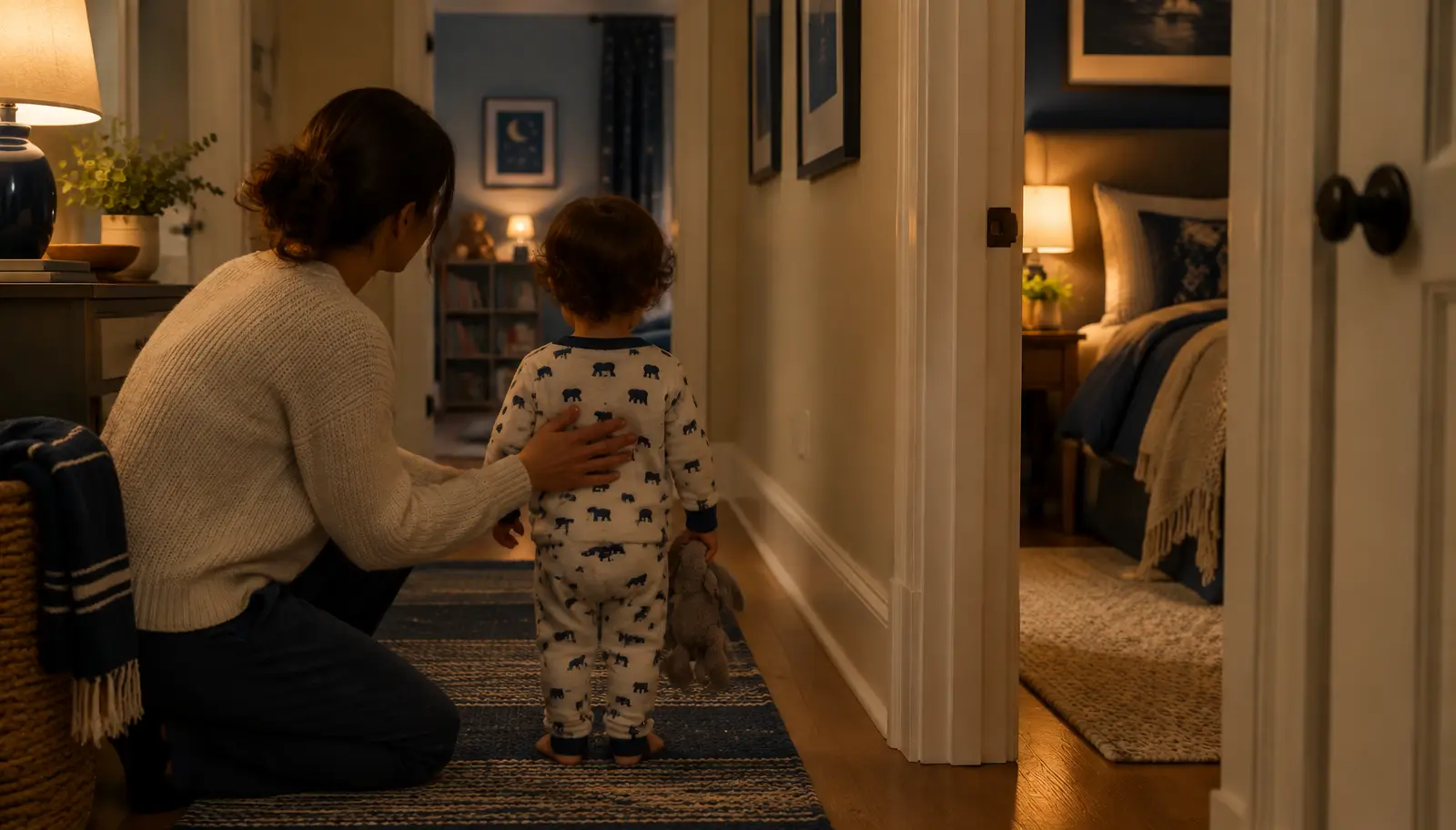
This is the core of the plan. When your child comes into your room, get up, take their hand, and walk them back to bed, calmly and quietly. Tuck them in, say a short, warm phrase, like "It's sleeping time. I love you. Goodnight", and leave. Keep it the same every time. Don't chat, don't negotiate, don't get cross.
The first nights, you might do this many times. That's normal. What matters is that you respond the same way every time. Your child is learning that coming into your bed no longer leads to sleeping in your bed.
6. If your child is very upset, stay for a little while
For children who are frightened or very anxious, it's fine to sit beside their bed until they're calm. Then gradually reduce this over the next nights: sit by the door, then check in from the doorway, then go back to the simple return.
7. Use a toddler clock and a reward
A toddler clock that changes colour when it's morning gives a clear signal: stay in bed until the light changes. For children around three and older, a simple reward for staying in bed all night, like a sticker on a chart in the morning, can be very motivating. Keep the reward small and immediate.
8. Keep everything consistent
If your child sometimes ends up in your bed and sometimes doesn't, they'll keep trying, because sometimes it works. Consistency, even when you're tired, is what makes this change stick.
Safety for night wanderers
If your child is getting up and walking around at night, make sure the house is safe:
- a stair gate at the top of the stairs, or at their bedroom door;
- furniture anchored to the wall;
- windows secured;
- a night light in the hallway, if your child needs to find your room.
What to expect
The first nights may be the hardest while a child tests whether the new response is consistent. Adjustment time varies, and occasional visits can return during illness or a big change. Respond calmly and continue the plan you chose.
What if they're coming in very early?
If your child mostly arrives around 5 or 6am, the issue may be early rising rather than night waking. Look at bedtime, darkness in the room, and the toddler clock. See why your child wakes at 5am.
Gentle alternatives
Not every family wants a strict rule. Some alternatives:
- A small mattress or sleeping bag on the floor of your room. Your child can come in quietly and sleep there, without waking you. Some families use this as a step on the way to sleeping in their own room.
- Visits after the green light. Your child stays in bed until the toddler clock changes, then can come in for morning cuddles.
Whatever you choose, make the rule clear and stick to it.
The short version
Toddlers come into their parents' bed for lots of reasons: habit, fears, separation anxiety, or newfound freedom. Decide what you want, explain it simply, strengthen the bedtime routine, and use a calm, consistent silent return every time. Add a toddler clock and a small reward for older toddlers. Within one to two weeks, most families get their bed back.
If you'd like a plan built around your child's age and sleep pattern, Lunio builds one in a few minutes. And if you'd like to talk it through, Nora Live is there.
Lunio provides educational sleep coaching, not medical diagnosis or treatment. Follow your child's clinician and local safe-sleep guidance.
More on these topics
Want someone to look at this with you tonight?
Nora Live is a 25-minute voice consultation, available right now — no waiting list. You get the session report, your 5-night plan and five nights of chat follow-up. $89.
$45 one-time · No account, no app